How one Ara graduate is designing for a low-carbon future
27 April, 2026
Elizabeth Guthrey’s straw bale passive house, featured on Grand Designs, demonstrates low-carbon design in practice.
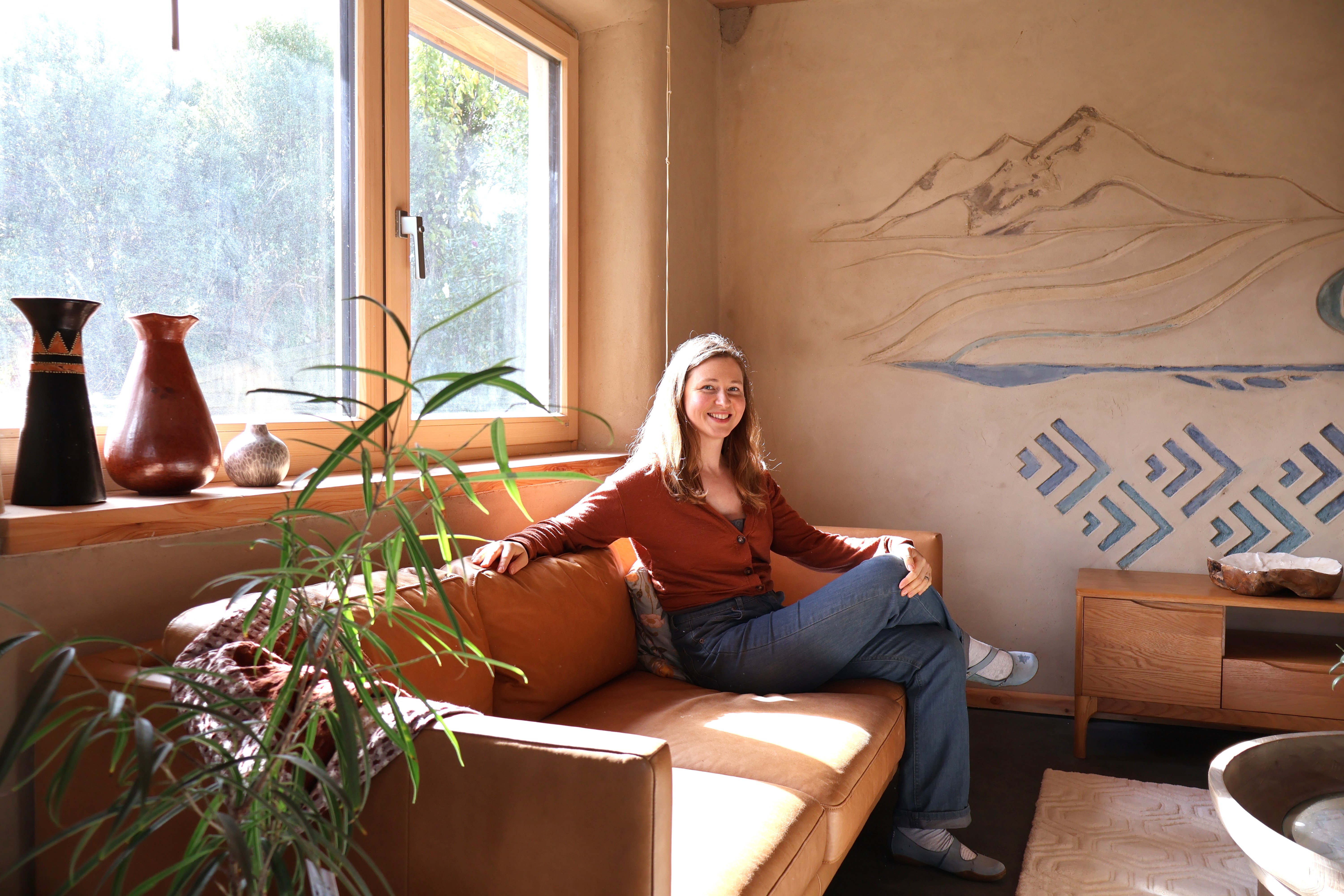
Elizabeth Guthrey in her Huntsbury Hill home, a straw bale passive house she designed and built with husband Everett Norris
Elizabeth Guthrey spent the better part of a decade thinking about what buildings owe the planet. Now, with the completion of a straw bale passive house on Huntsbury Hill, her own home, designed and largely built by her own hands, she has an answer she can point to.
The house, which featured on Grand Designs New Zealand this week, brings together a design approach Elizabeth has been developing since she was a teenager, concerned about climate change. It’s a plastered straw bale, certified Passive House, and as of this month, Homestar 10, the highest possible rating under New Zealand’s green building standard.
Elizabeth graduated from Ara’s Bachelor of Architectural Studies (BAS) in 2020 and now works as an architectural designer for Design & Make Architects in Christchurch. Elizabeth said the house on Huntsbury Hill is both a personal milestone and a professional application of ideas developed through study and practice.
Her pathway into architecture wasn’t linear. After finishing school, Elizabeth planned to study environmental science and began a geography degree. She then moved to the United States, where she completed a Bachelor of Arts in environmental studies, alongside practical training in permaculture design, native restoration, and sustainable building.
She said it was during this time that she began to focus on the built environment.
“I realised I could work towards environmental goals through buildings,” she said.
She went on to complete a Master’s degree in architectural management, business, and design in Madrid. Without a formal architecture background, she undertook additional study beforehand, including learning Building Information Modelling (BIM) software and becoming familiar with building codes.
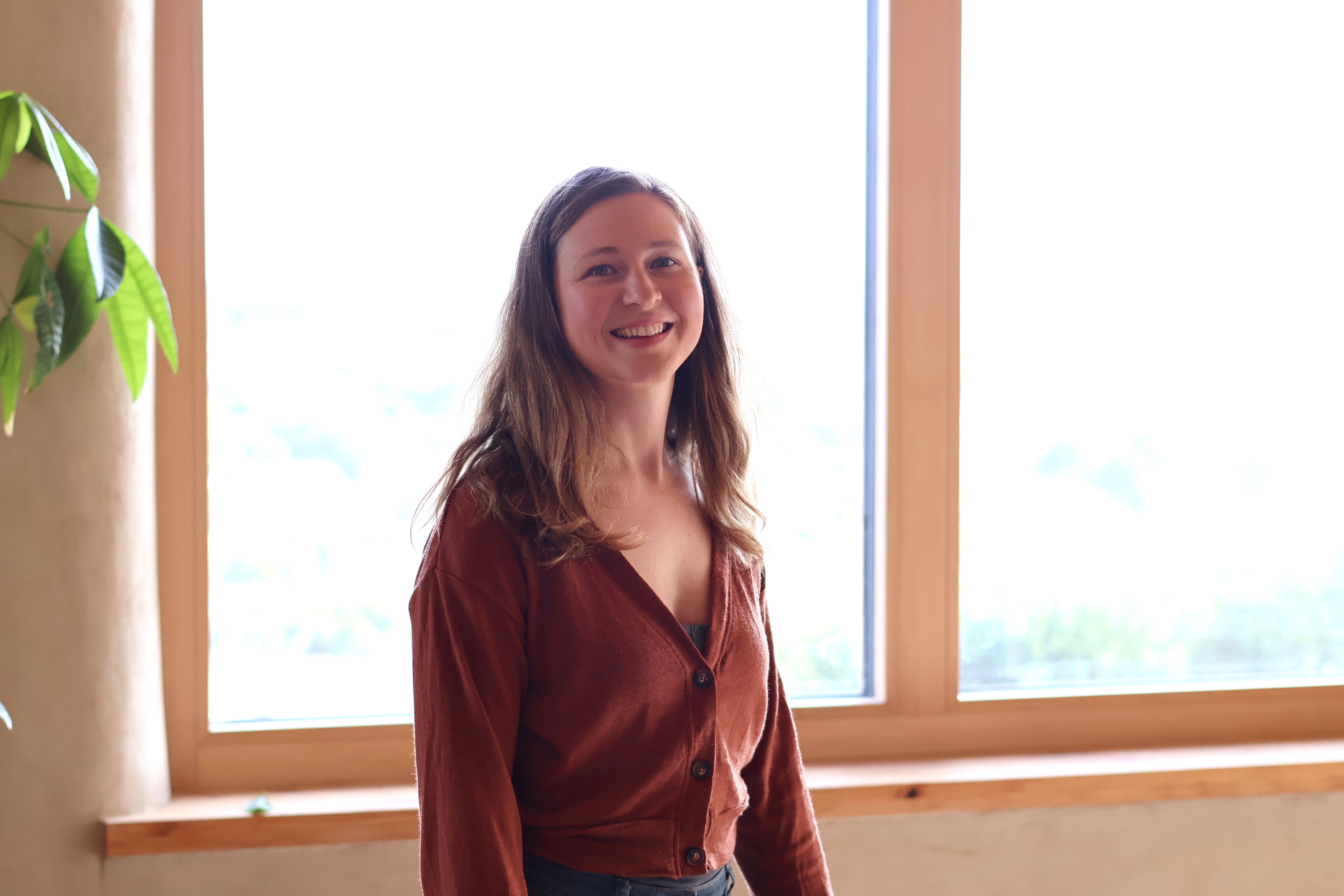
Elizabeth said her time at Ara helped shape her approach to sustainable and adaptable design
After returning to New Zealand, Elizabeth worked across a range of roles, including with a sustainable design social enterprise and in environmental restoration. She said she wanted a stronger foundation in architectural design.
“I wanted to do what I love. I wanted to design great buildings well and have a stable career,” she said. That led her to enrol in Ara’s Bachelor of Architectural Studies.
Elizabeth said the programme’s practical focus and access to tutors supported her development.
“The classes were small, and you had good access to tutors,” she said.
She said courses in co-housing and natural building techniques influenced how she approached design, particularly in relation to how buildings are used over time.
“The co-housing course made me think about how buildings can work for different people and different stages of life,” Elizabeth said.
That thinking is reflected in the Huntsbury Hill house, which Elizabeth and her husband, Everett Norris, director of Ever Homes, designed from the outset to support different living arrangements over time, rather than a single household type.
“Most houses are designed for one point in time,” she said. “But people move through different stages in their lives, and houses often last much longer than the people who first built them. We’re just the first residents in this house, which we hope will be around for generations.”
With this in mind, Elizabeth designed the home using a structural grid system, allowing some internal walls to be added or removed over time, as the needs of the home’s residents change. Both floors include key amenities, enabling the house to function as separate living spaces if required.
Elizabeth said this adaptability was an important part of sustainable design and was reinforced during her time at Ara.
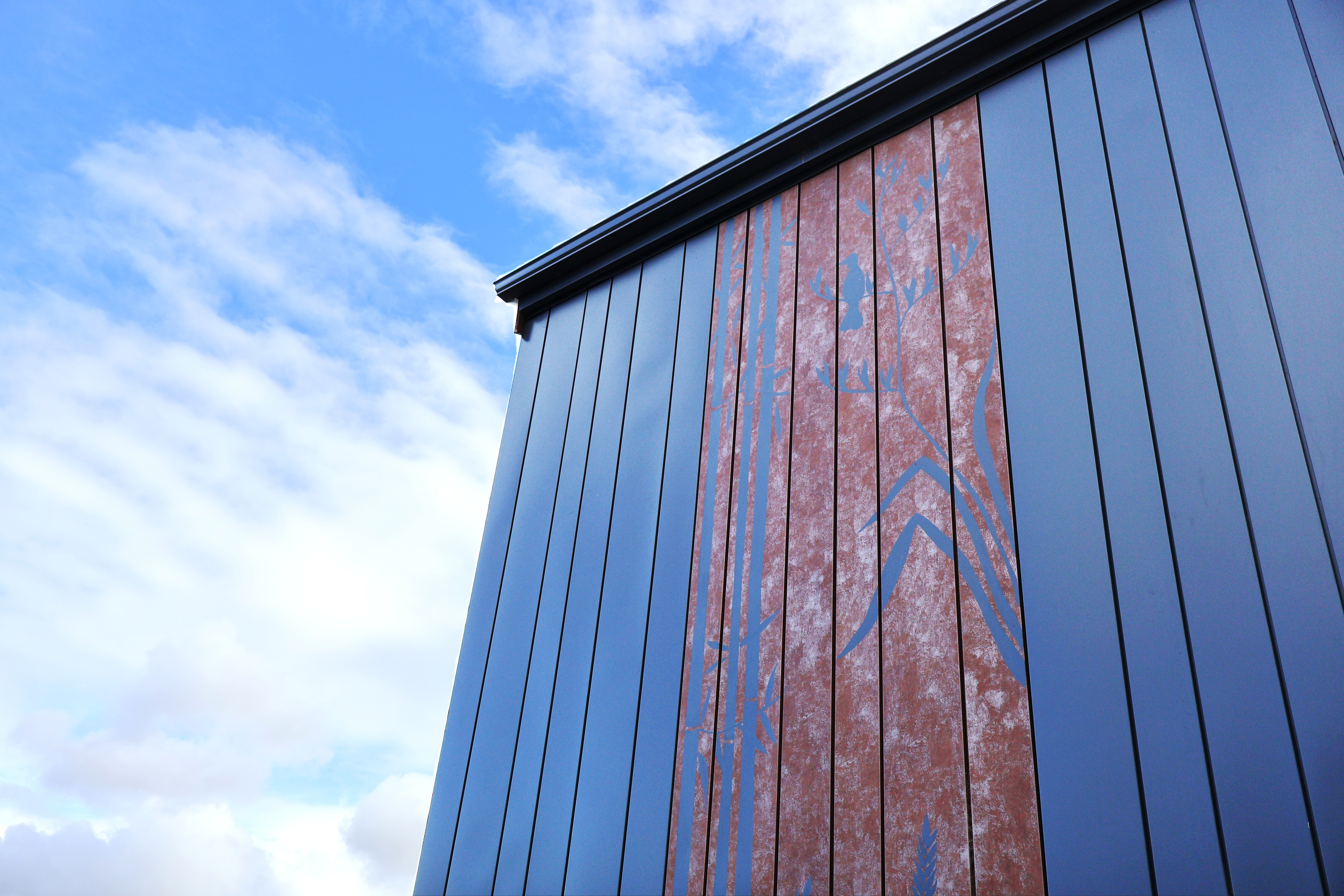
The home’s street frontage combines durable cladding with a patterned feature panel
“It’s not just about materials. It’s about how a building can change over its lifetime and work for different people,” she said.
Her interest in natural materials developed further during her studies, including straw bale construction, which initially appealed for its appearance before extending to its environmental benefits.
“It was initially the look, the softness of the walls and the deep window reveals,” Elizabeth said. “But as I learned more, it made sense environmentally.”
Encased in plaster, the straw walls form part of an airtight building envelope that supports Passive House performance.
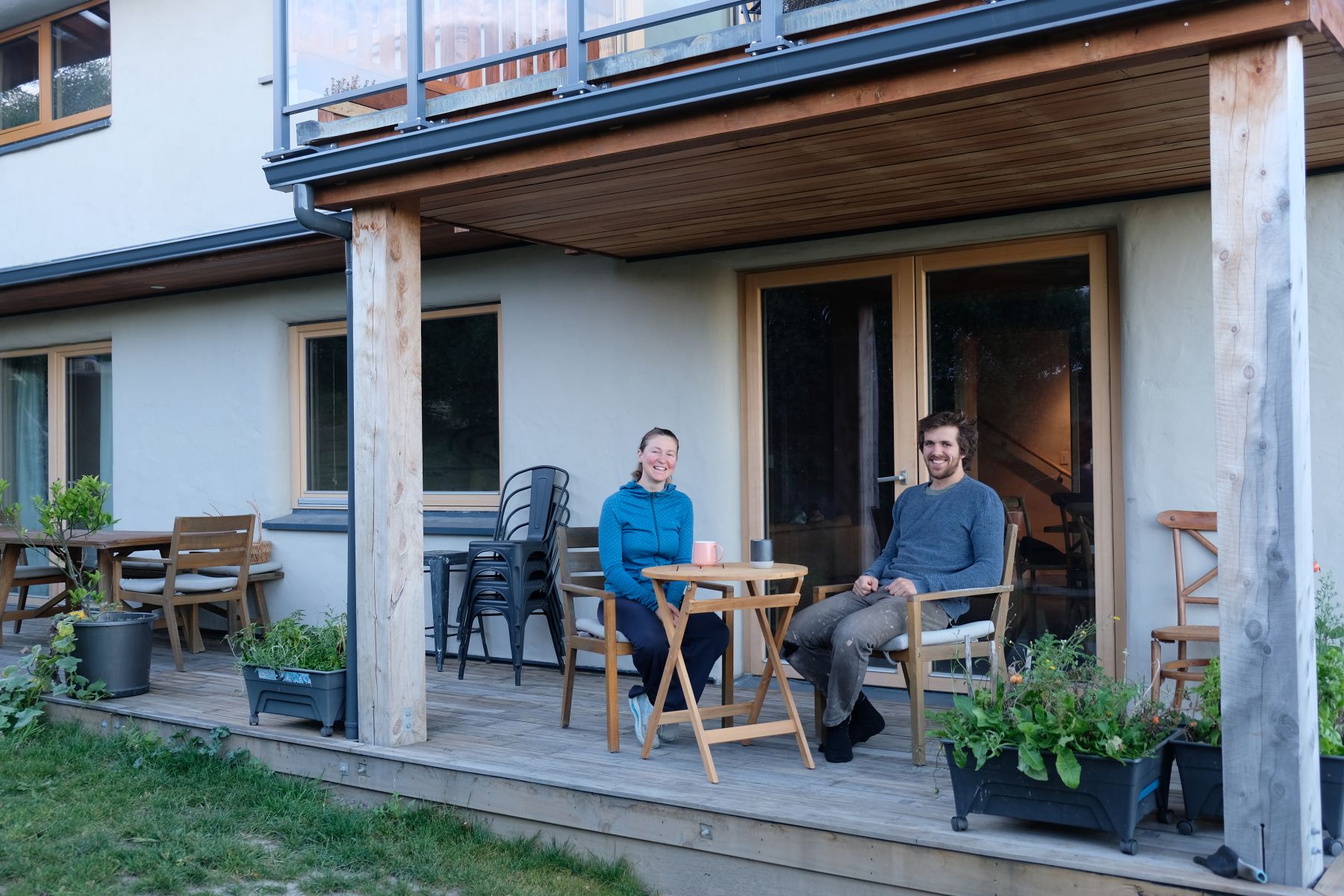
Elizabeth and Everett enjoying one of the outdoor living spaces on the north-facing elevation of their Huntsbury Hill home. This side features direct lime plaster applied to the straw bales and timber frame, made possible by deep eaves that provide protection and ensure durability.
The material palette carries through to the interior. Much of the house is finished in an earth plaster coat, but there are moments of contrast and craft. In the kitchen, a tadelakt finish creates a soft, polished surface, made using lime plaster, olive oil soap and finished by hand-polishing with stone. It’s subtle, but as you move from the kitchen into the dining and living spaces, the shift in texture and light becomes part of how the house is experienced. Guthrey said she deliberately avoided a hard edge, instead turning the junction into a feature with a repeating pattern used throughout the home.
Elizabeth said one of her favourite parts of the build was plastering the walls and crafting murals using layers of coloured plaster.
“We didn’t want everything to be the same,” Guthrey said. “Those transitions matter. You notice how the space changes as you move through it.”
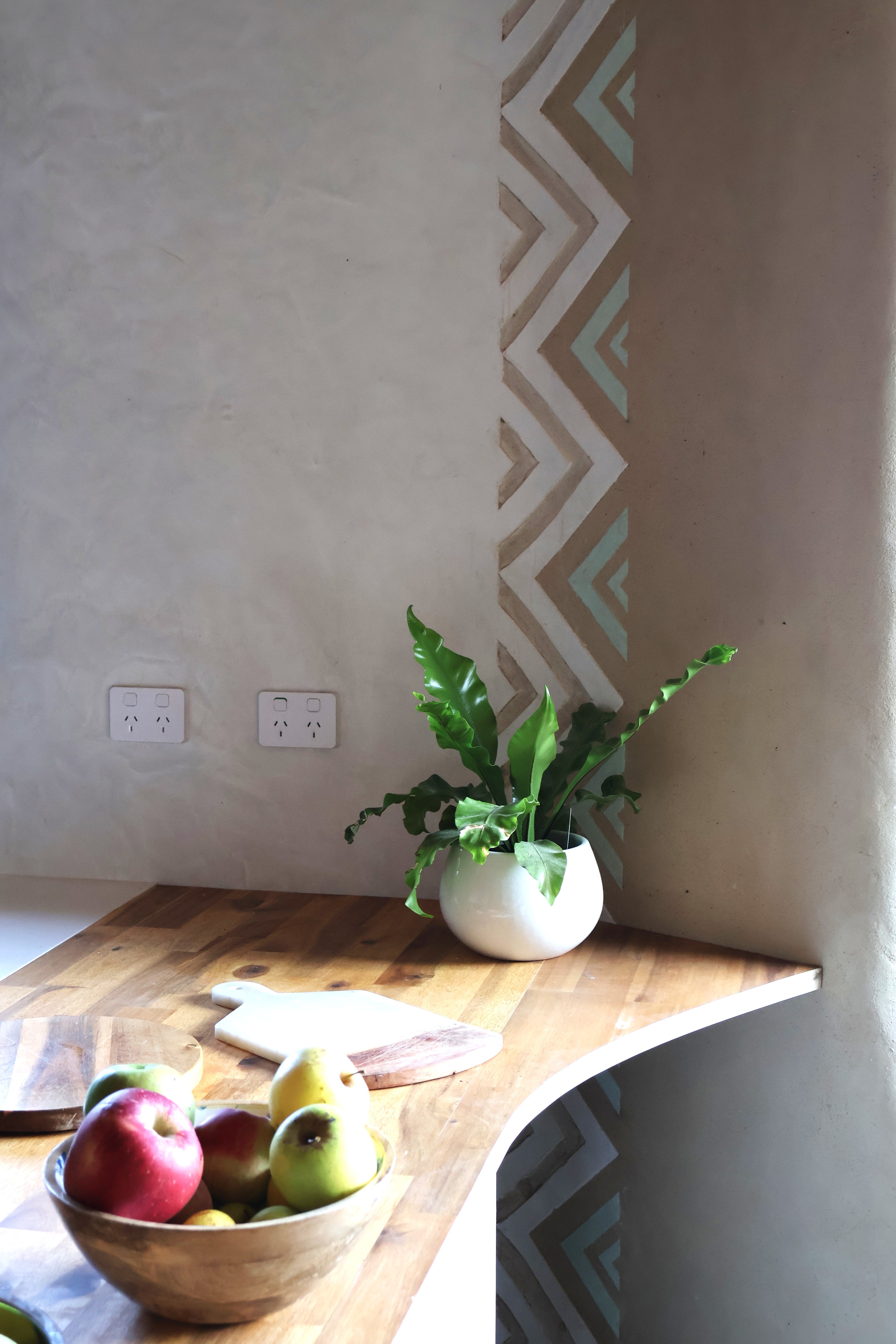
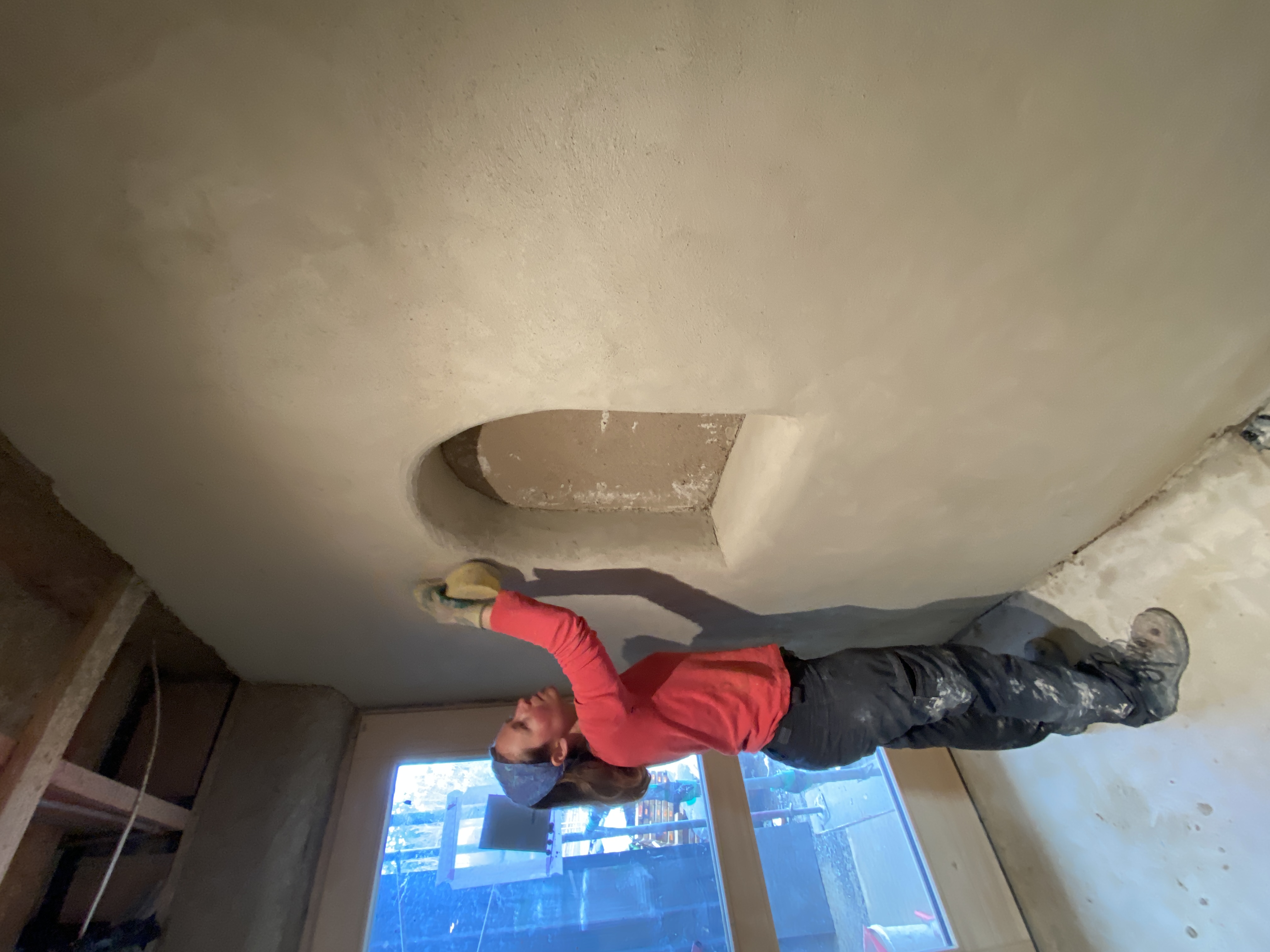
Natural plasters are used throughout the interior, with a patterned transition marking the junction between finishes.
The house took around two and a half years to complete, with Everett working on it full-time and Elizabeth balancing paid work with the build. They brought in contractors where needed, but much of the labour was their own, supported at times by travelling volunteers.
Like many self-builds, it came with financial pressure and long hours. “You’re always aware of the budget,” she said. “Every free moment is spent on the house. So your social life becomes working bees, inviting friends over to help and hang out at the same time.”
Elizabeth encouraged current students to make the most of their time at Ara.
“My advice would be to ask questions and get as much as you can out of your tutors,” she said. “They have a lot of experience beyond what’s in the course content.”
She said studying offered a rare opportunity to think freely and explore ideas without the constraints of practice.
“At university, you can follow your ideas and test what’s possible,” Elizabeth said. “When you go into the workforce, there are more constraints, budgets, clients, regulations. You don’t always get to take those ideas as far as you’d like.”
Designing and building her own home gave her the chance to return to that way of thinking, to live out those dreams.
“Building this house felt like being a student again, but in the real world,” she said. “It was a chance to bring together everything I’d been interested in and actually do it.”
She said that experience reinforced the value of making the most of study while it lasts.
“It’s probably one of the only times you get to explore those ideas so freely,” she said. “So it’s important to take that opportunity and push it as far as you can.”
Since graduating, Elizabeth has worked with Design & Make Architects, focusing on natural materials and low-impact design. She’s now a Certified Passive House Designer and Homestar Assessor, and has hosted Ara students on site visits.
She said designers have a significant role to play in influencing environmental outcomes.
“As designers, we can influence decisions about materials, energy use, and how buildings perform over time,” she said.
Elizabeth Guthrey graduated from Ara's Bachelor of Architectural Studies in 2020. She’s an architectural designer at Design & Make Architects in Christchurch. Grand Designs New Zealand Season 10, Episode 3, is now available to watch on TVNZ+. The house was also selected for Open CHCH and quickly booked out, reflecting strong public interest in the project.
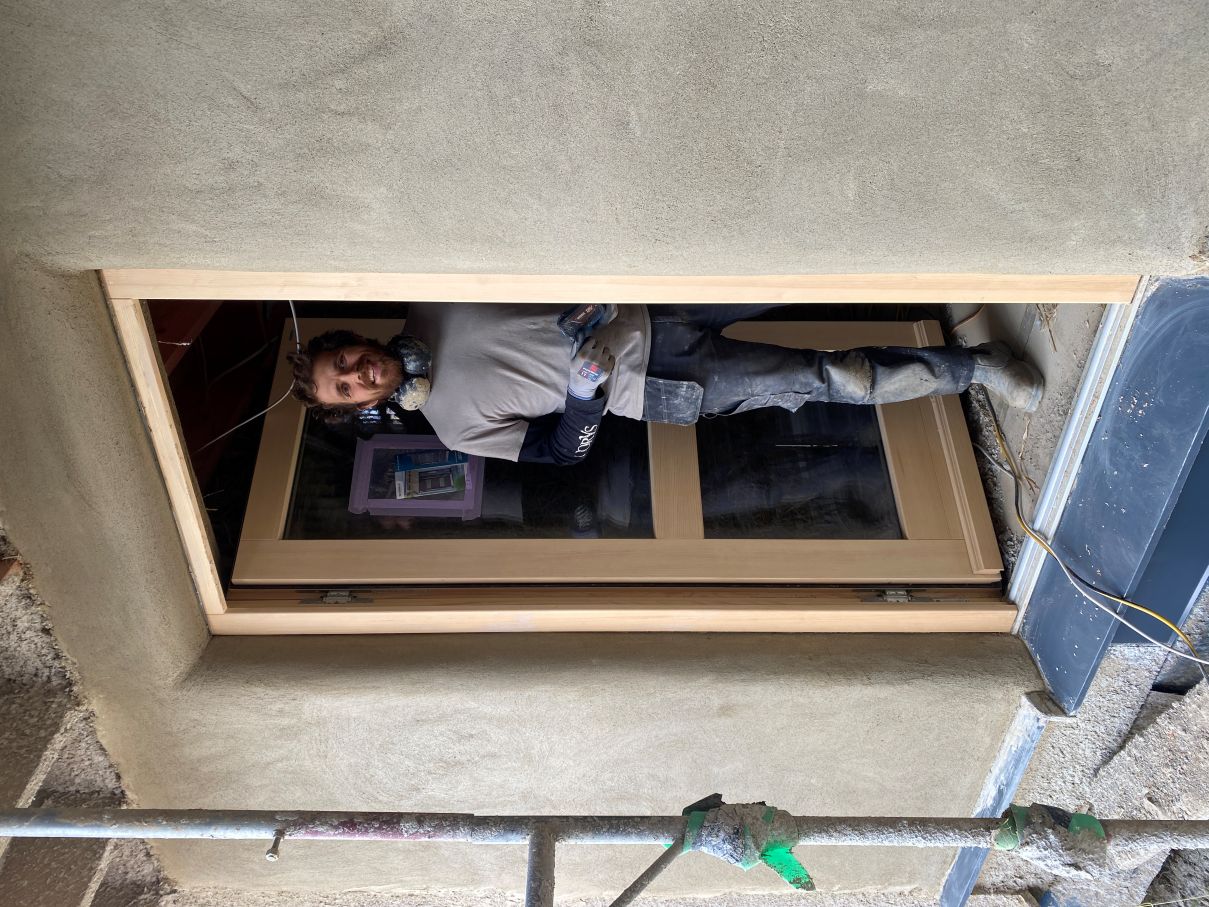
Everett applying lime plaster to the straw bale walls. The plaster forms part of the home’s airtight envelope, while also providing a durable, hand-finished surface.