From wastewater to real-world solutions: Dr Matt Ramezanian Pour’s applied approach to environmental engineering
29 April, 2026
Engineering solutions grounded in practice and built with students
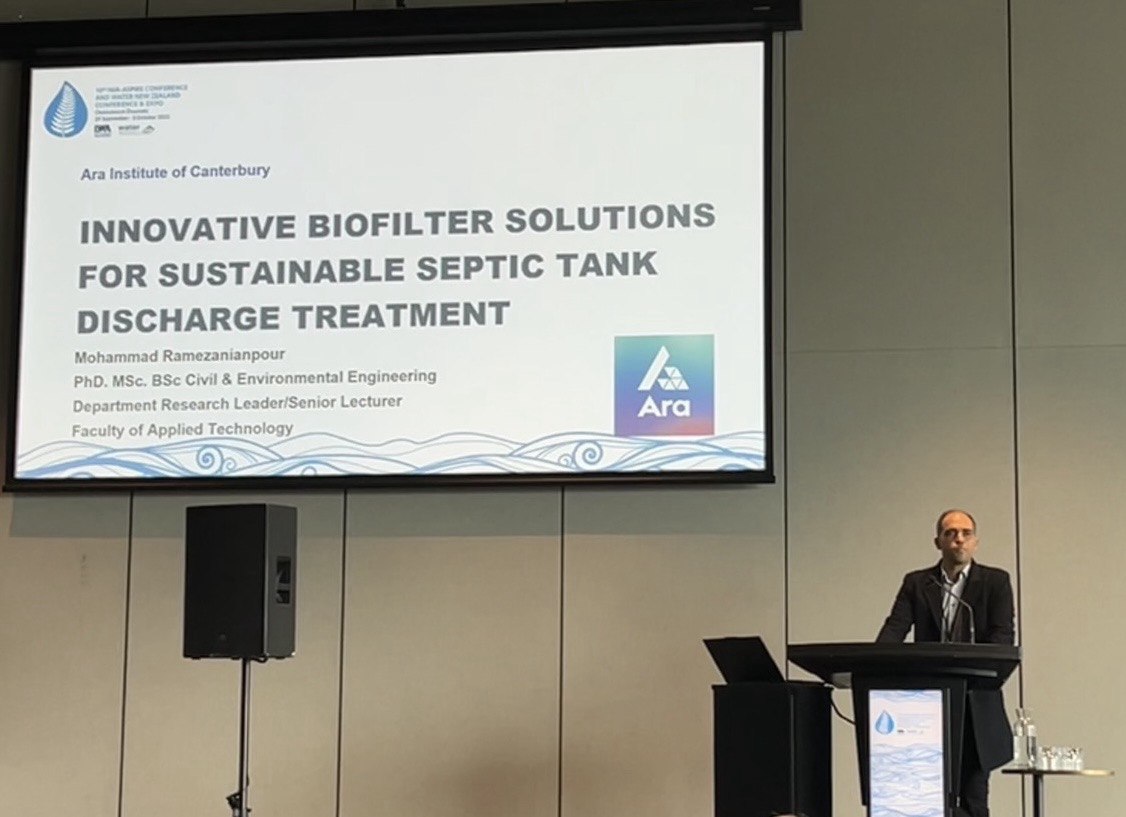
Dr Ramezanian Pour presenting at the International Water Association (IWA) Conference, 2025
Dr Mohammad (Matt) Ramezanian Pour didn't set out to end up in Christchurch. Growing up in Tehran, a city of 14 million people, he knew early that he wanted something different. Quieter. More focused. A place where you could actually think.
Engineering gave him that direction. Environmental engineering, specifically: the intersection of infrastructure and impact, of systems that affect how people live and how ecosystems function. He completed his PhD at the University of Wollongong, where his doctoral research explored solar-powered membrane distillation as a method for treating brackish and grey water. After graduating, he spent a year and a half at a Sydney consultancy, and concluded fairly quickly that industry alone wasn't what he was after.
"For me, it's always been about how engineering can be applied in practice," he said. "Not just theory, but solutions that make a difference."
When a role came up at Ara Institute of Canterbury in 2016, combining teaching and research in a hands-on environment, he took it without having visited New Zealand first. He never left.
Now Research Lead and Senior Lecturer in Civil and Environmental Engineering, Dr Ramezanian Pour works at the intersection of water, sustainability and infrastructure. His research spans greywater reuse, stormwater contamination and wastewater treatment, with a consistent focus on replacing conventional materials with lower-cost, lower-carbon alternatives.
One thread running through several projects is the question of what happens when you substitute standard engineering media for something more sustainable. Biochar, crushed glass and recycled concrete have all featured in his work, tested against conventional options to see whether performance holds while cost and environmental impact come down. In a number of cases, they do.
Stormwater has been another focus. Working alongside Environment Canterbury since 2017, Dr Ramezanian Pour has been addressing heavy metal contamination from urban roofs and runoff, a largely invisible problem with real consequences for waterways. One tangible outcome: a functioning rain garden, designed through student research and now installed in front of Ara's engineering faculty.
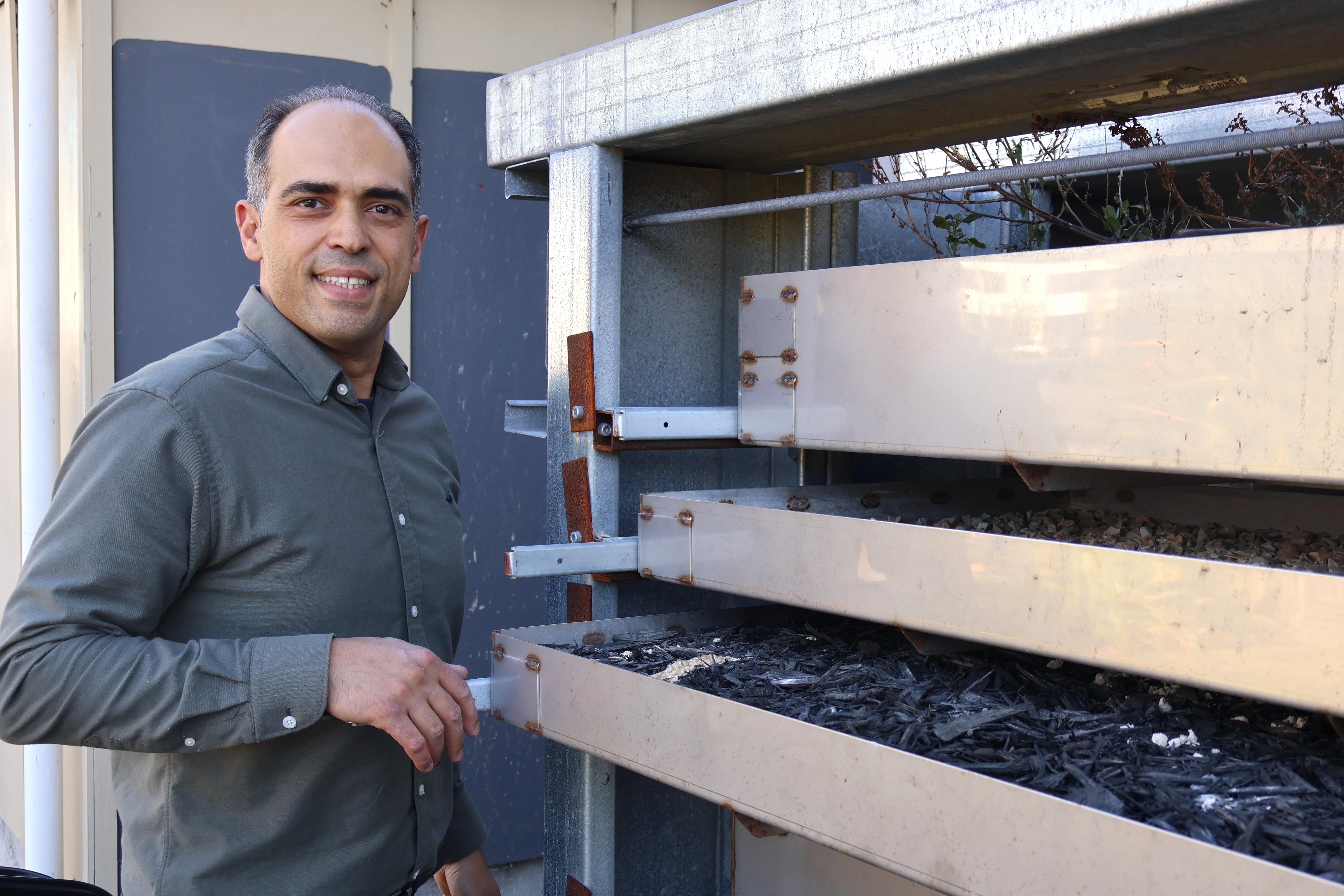
Dr Ramezanian Pour with the rain garden on Ara's City Campus
Septic tank discharge is a third area. In rural settings, septic systems often operate with minimal maintenance and limited treatment capacity, creating ongoing environmental risk. Working with an industry partner, he has been developing biofiltration systems that treat discharge more effectively, using sustainable filter media rather than conventional options.
Perhaps the most distinctive project to date is an electrocoagulation device designed to treat laundry wastewater, which was built collaboratively with civil and mechanical engineering students. The device integrates two treatment units into one, and early test results have been promising. A publication is in progress.
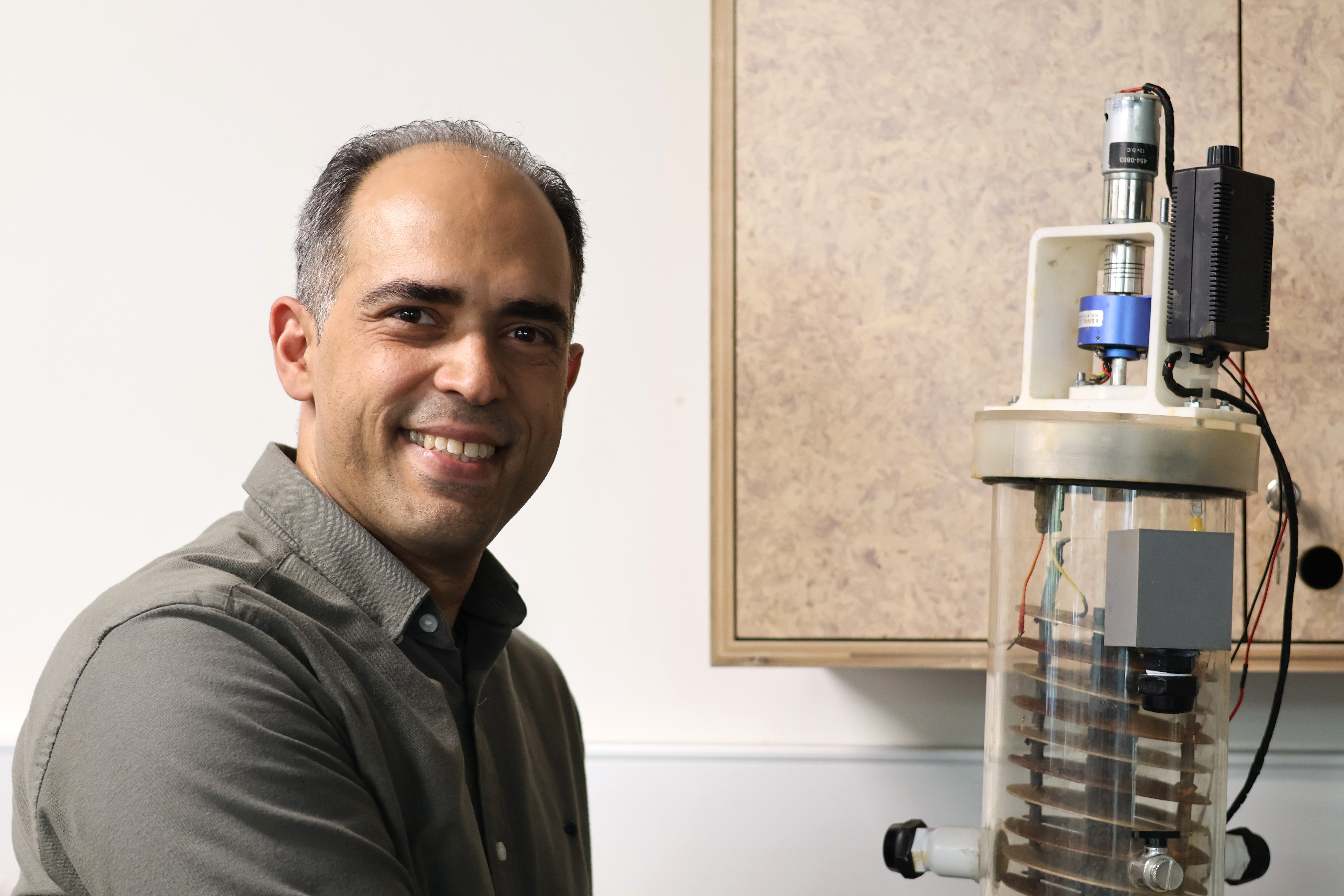
Dr Ramezanian Pour with an electrocoagulation device - a student-built system designed to treat laundry wastewater.
Much of this work is shaped by, and built with, students. Final-year projects frequently become the starting point for genuine research: students design, test and refine engineering solutions under supervision, then increasingly drive the work themselves.
"What inspires me most is seeing the real-world impact of what we do," he said. "When a student design is actually used outside the classroom, it reinforces why this work matters."
He has supervised award-winning student research, including a greywater treatment device recognised by Engineering New Zealand and is continuing to develop a membrane distillation unit in Ara's laboratory, extending his doctoral work into new applications.
As Research Lead and a member of Ara's Rangahau, Research and Postgraduate Committee, he’s also contributing to the organisation's research strategy ahead of funding changes in 2027.
"Engineering has the potential to genuinely improve people's lives and our environment," he said. "That's what motivates me."
Connect with Dr Ramezanian Pour and his research:
- ResearchGate
- PhD thesis: Solar powered vacuum membrane distillation for brackish and grey water treatment
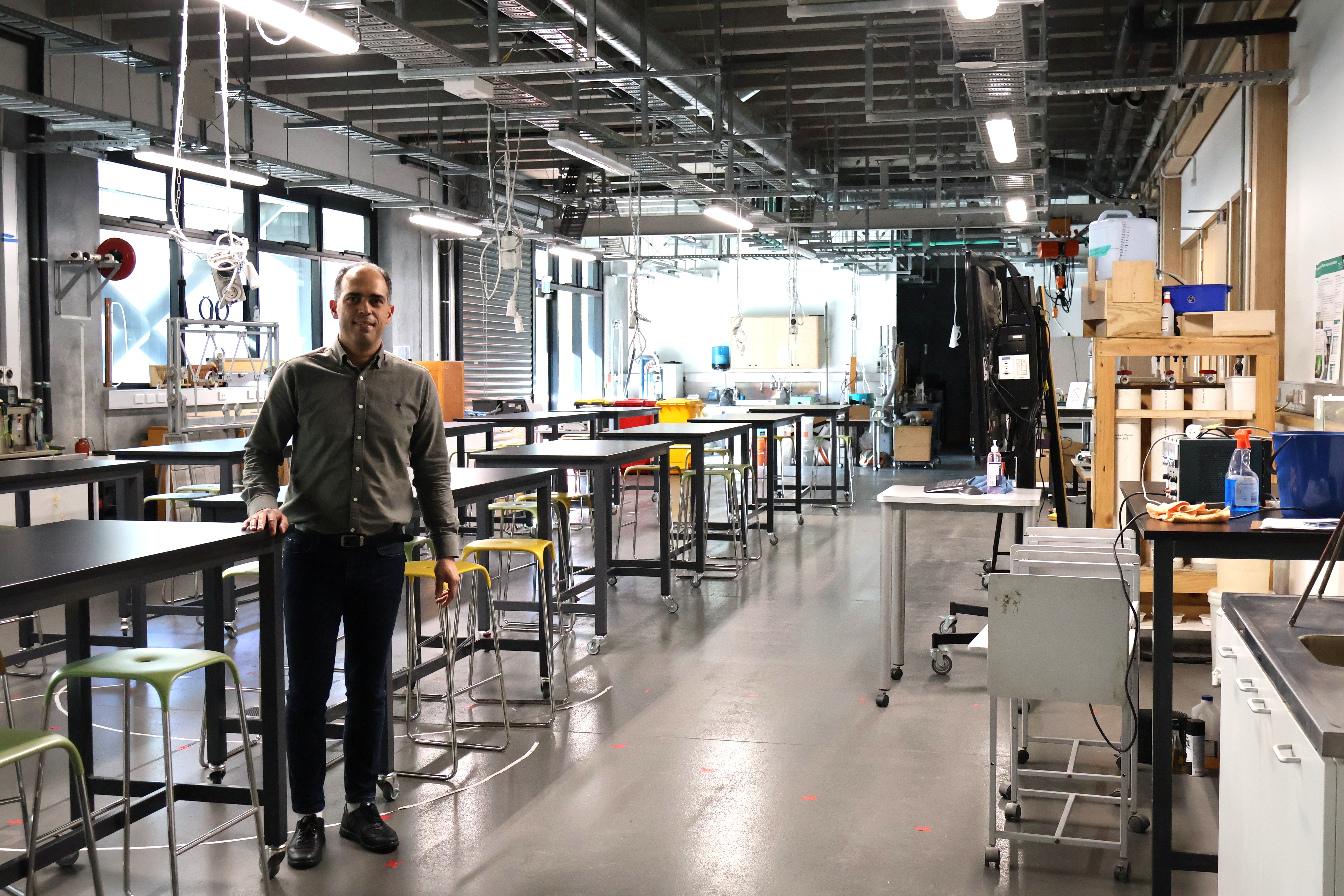
Dr Ramezanian Pour in one of Ara's engineering laboratories