Smart cities, smarter classrooms - Dr Amitrajit Sarkar explores applied innovation
10 December, 2025
Dr Amit Sarkar’s research bridges AI, smart cities and real-world innovation to create practical, future-focused solutions for students and industry.
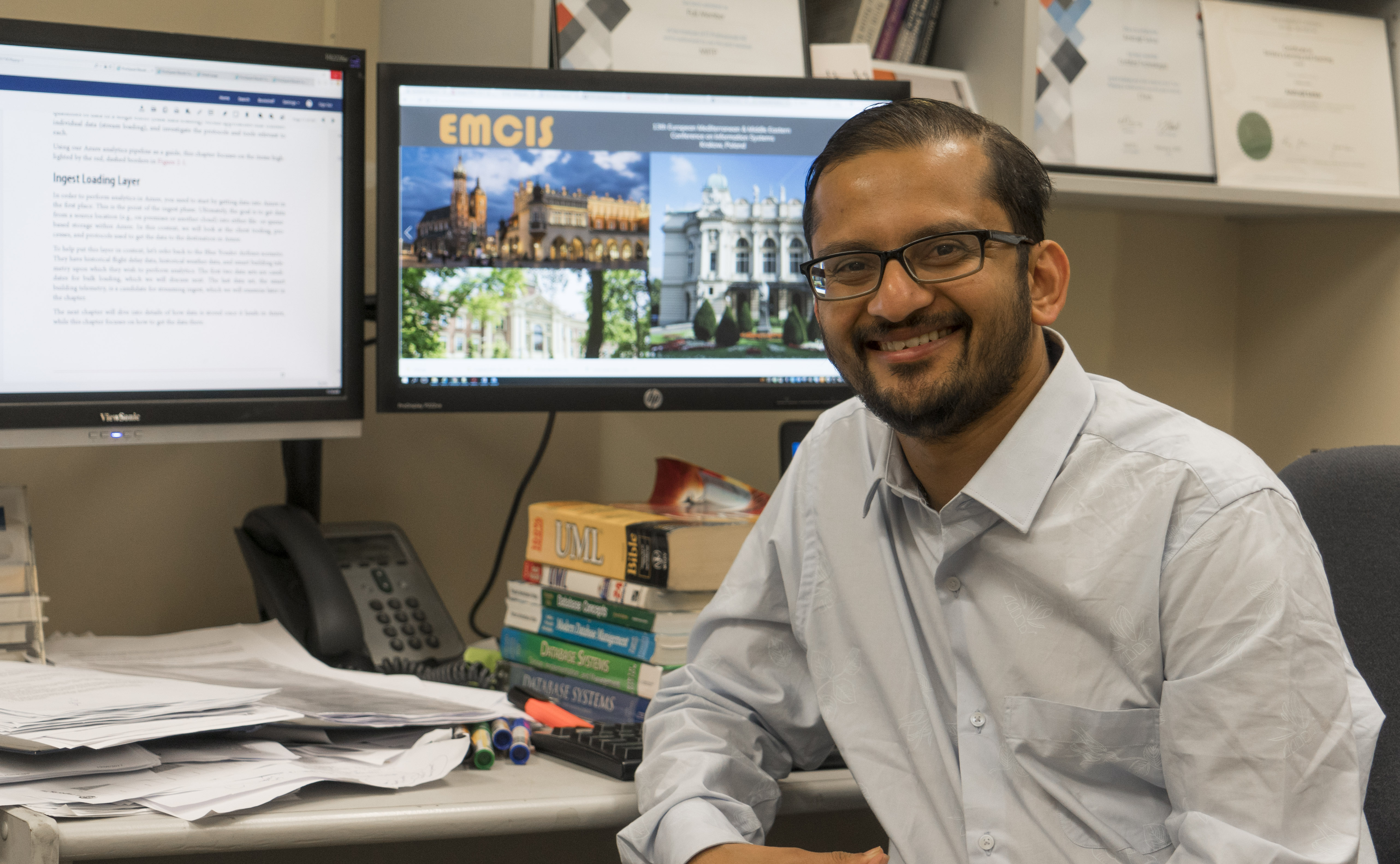
When software engineer Amit Sarkar saw a job ad for an academic role at Ara back in 2005, he had no idea it would set him on a path that combined education, research and hands-on innovation in equal measure.
Now a senior lecturer in Computing at Ara Institute of Canterbury, Sarkar’s work bridges artificial intelligence, smart cities, and vocational teaching, always with an eye on real-world application. Whether developing AI tools to support learners or designing systems to improve urban life, his research is shaped by a commitment to collective benefit and future-ready education.
After completing his Graduate Diploma, Sarkar worked as a software engineer. After he started at Ara, he completed both a master’s and a PhD in Information Systems and Computer Science, all while working full-time and receiving a full scholarship for his doctoral research, which explored IT governance and Information Systems Resilience decision-making under uncertainty.
“From the beginning, I was interested in how theory meets practice,” Sarkar said. “Not just research for its own sake, but research that matters - inside the classroom, and out in the world.”
That philosophy continues to guide his projects today. His research includes collaborations with industry and government, such as a smart waste management system that earned civic recognition in Germany and ongoing work with startups through the Ministry of Awesome (MoA) in Ōtautahi Christchurch.
In collaboration with fellow Ara researcher Dr Selena Chan, Sarkar has co-developed a teaching tool called AKO-AI Buddy Tutor, an AI-powered assistant designed to guide students through problem-solving in a Socratic style - supporting thinking rather than handing over answers.
“We didn’t want to build another shortcut,” he explained. “The goal is to democratise education by helping students discover how to think, not just what to think. AI should support learning, not bypass it.”
Sarkar describes himself as an “constructivist action researcher”- someone who studies by doing. He works with students, educators and industry partners to develop, test and refine tools in real time. His work is also contributing to national conversations around digital equity, AI literacy and responsible technology use.
“The biggest myth is that AI will replace tutors,” Sarkar said. “It won’t. It can transform education, but it still needs empathy, creativity and human insight. Those things don’t come pre-installed in machines.”
He’s currently involved in developing ethical AI models in collaboration with institutions including the University of Canterbury and Otago Polytechnic and is a council member of the Royal Society of New Zealand’s Canterbury Chapter and leads their digital strategy. His work has been published in international collections, for example, Artificial Intelligence in Vocational Education and Training (Springer, 2025), and he regularly presents at conferences in Aotearoa and abroad.
At Ara, Sarkar’s research and teaching are deeply connected. He collaborates with students and colleagues across disciplines, exploring how emerging technologies can help identify student needs, personalise support, and open up access to education for more learners.
For him, the point of disruption isn’t about replacing the old. It’s about imagining what’s next, together.
“Education should be a collective act,” Sarkar said. “That’s where the real innovation happens - when people come together to solve problems that matter.”
Connect with Sarkar and his research: